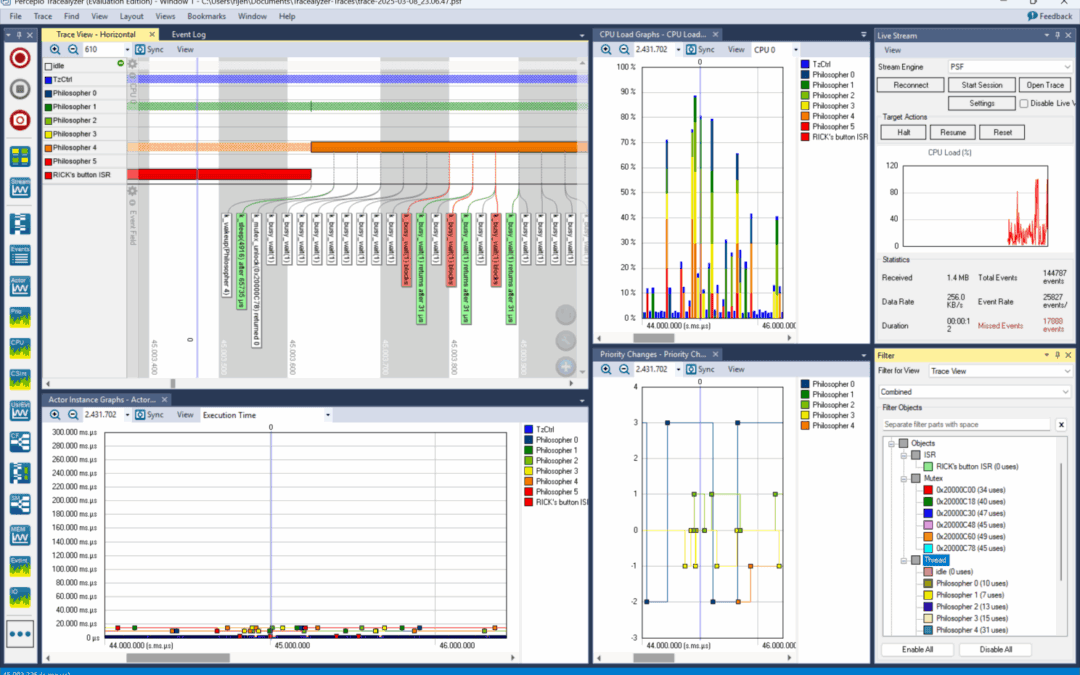
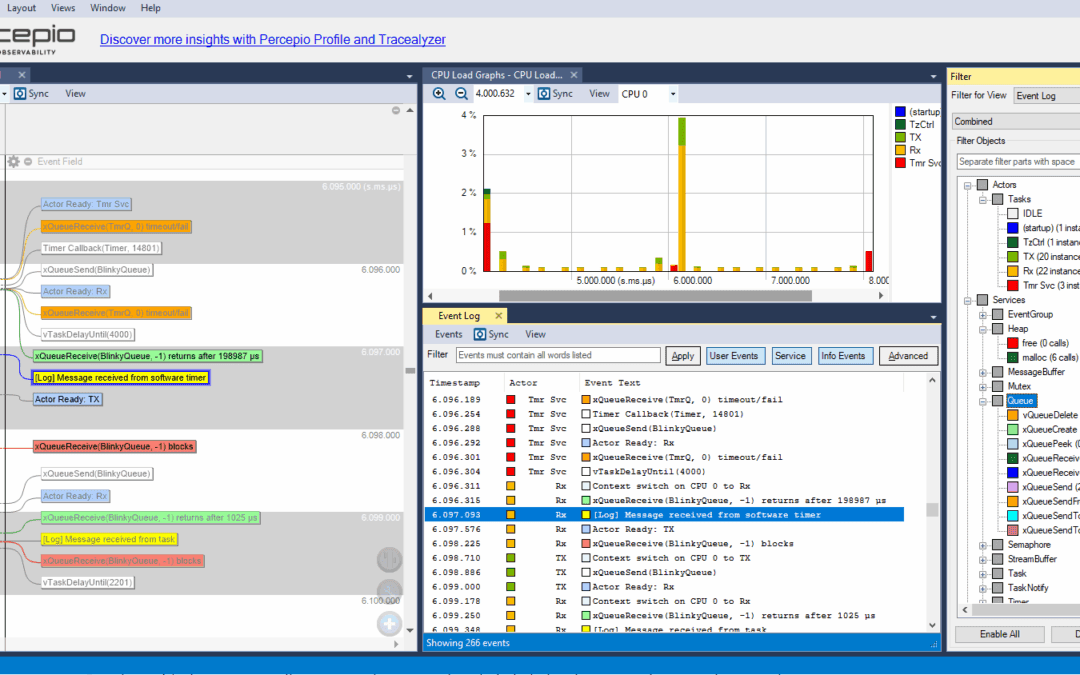
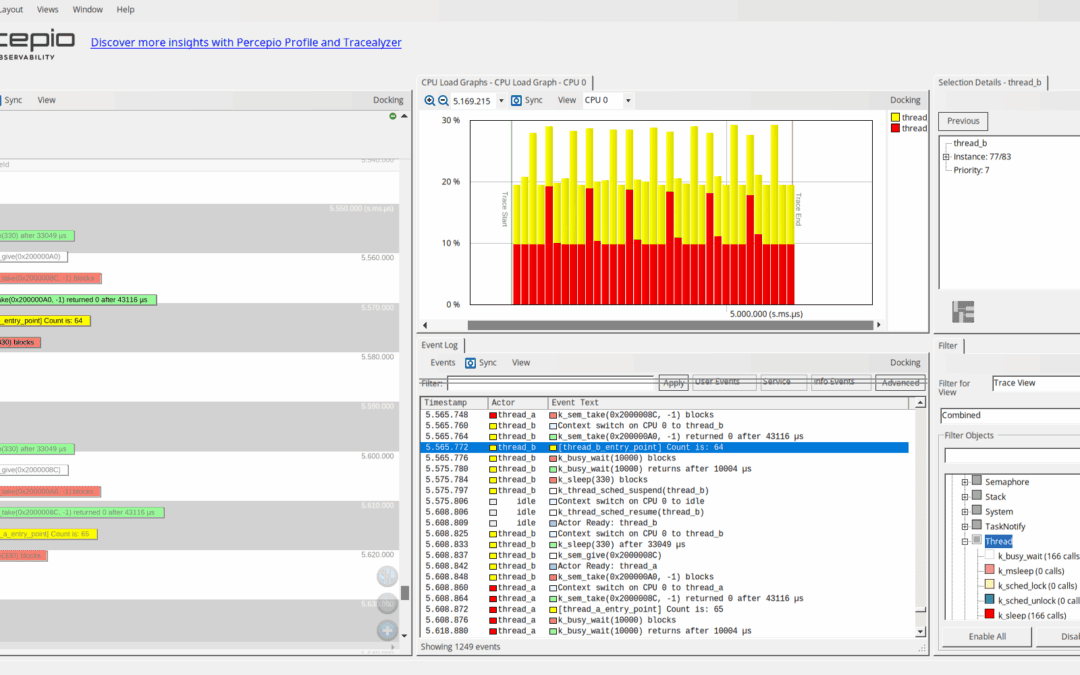
Supporting the new best practice of Observability Driven Development (ODD), Percepio Detect enables next-generation DevOps for embedded software by seamlessly extending the capabilities of existing Continuous Integration and Continuous Testing (CI/CT) processes.
Percepio announces the launch of Percepio Detect, a groundbreaking tool that supports the new best practice of Observability Driven Development (ODD) and redefines how embedded software developers tackle testing, debugging, and observability challenges.
The focus will shift in 2025 toward observability—giving developers and companies deeper insights into how their systems are performing in real-world environments. Observability tools help teams monitor system behavior, identify bottlenecks, and respond quickly to issues.
DevOps has revolutionized the way developers build and deliver software. Yet, despite its transformative potential, many teams inadvertently limit their success by focusing solely on the delivery pipeline—the CI/CD piece.
The world of embedded systems grows ever more sophisticated and software-centric. In this new landscape,a reactive, fire-fighting mentality is no longer sufficient. Developers need a proactive strategy to gain continuous visibility into system behaviour—a strategy known as observability-driven development (ODD).
We humans are (mostly) visual by nature, and having the means to visualize what is happening in a given system can really open up possibilities. Without the right tools we are often in the dark, quite literally.
The definition of observability is “the ability to measure the internal states of a system by examining its outputs”. For software systems, this means the ability to get detailed diagnostic data from the software during operation.
We serve cookies. If you think that's ok, just click "Accept all". You can also choose what kind of cookies you want by clicking "Settings".
Read our cookie policy