IAR Embedded Workbench

Debugging Embedded Firmware Issues

Debugging Embedded Firmware Issues

Firmware on embedded devices can freeze, overload, or behave unpredictably, leaving developers frustrated because traditional debugging tools often miss these issues. Intermittent problems, like a device requiring a power cycle, leave no diagnostic data in RAM, making it hard to understand what went wrong. Timing-related bugs are especially tricky, as standard logs or breakpoints cannot capture missing events.

read more
Percepio releases Detect 2025.2 with new TaskMonitor feature to identify firmware freezes

Percepio releases Detect 2025.2 with new TaskMonitor feature to identify firmware freezes

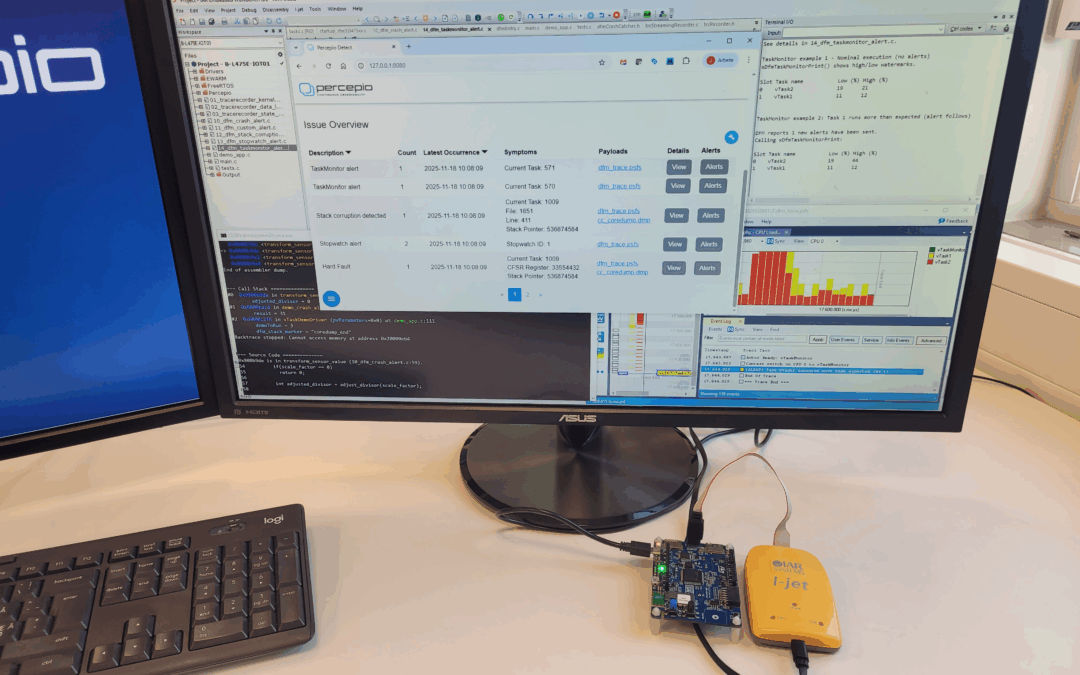
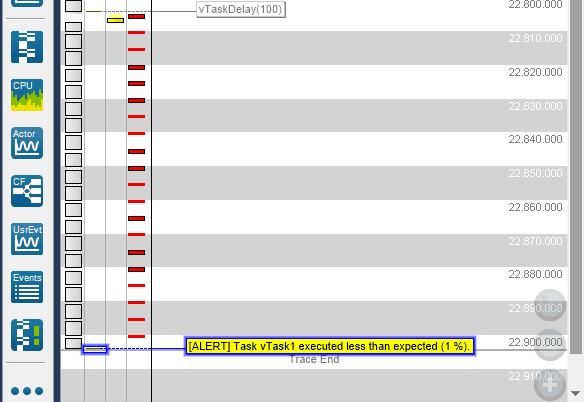
Percepio announced the release of Detect 2025.2 with new TaskMonitor, a feature designed to automatically identify firmware freezes, overloads, and timing anomalies – issues that often evade traditional debugging tools. Detect 2025.2 builds on Percepio’s self-hosted observability framework, which offers unlimited on-device monitoring and a “security-camera-style” trace capture system that records only when irregular events occur.

read more
Percepio Detect 2025.2 Makes Firmware Freezes Visible

Percepio Detect 2025.2 Makes Firmware Freezes Visible

New Percepio Detect 2025.2 release delivers faster debugging, smaller core dumps, expanded IAR Embedded Workbench® and Arm support, and TaskMonitor for automatic anomaly detection. Percepio Detect builds on Percepio’s self-hosted observability platform, offering unlimited on-device monitoring with “security-camera-style” trace capture that records only when unusual events occur.

read more
From Crashes to Clarity: What’s New in Percepio Detect 2025.2

From Crashes to Clarity: What’s New in Percepio Detect 2025.2

Think of Percepio Detect as a security camera for your firmware—always monitoring, but only storing data when something unusual happens, such as crashes or performance anomalies. By providing rich debugging information when needed while keeping the overall data volume...

read more